
The Environment of Ritual
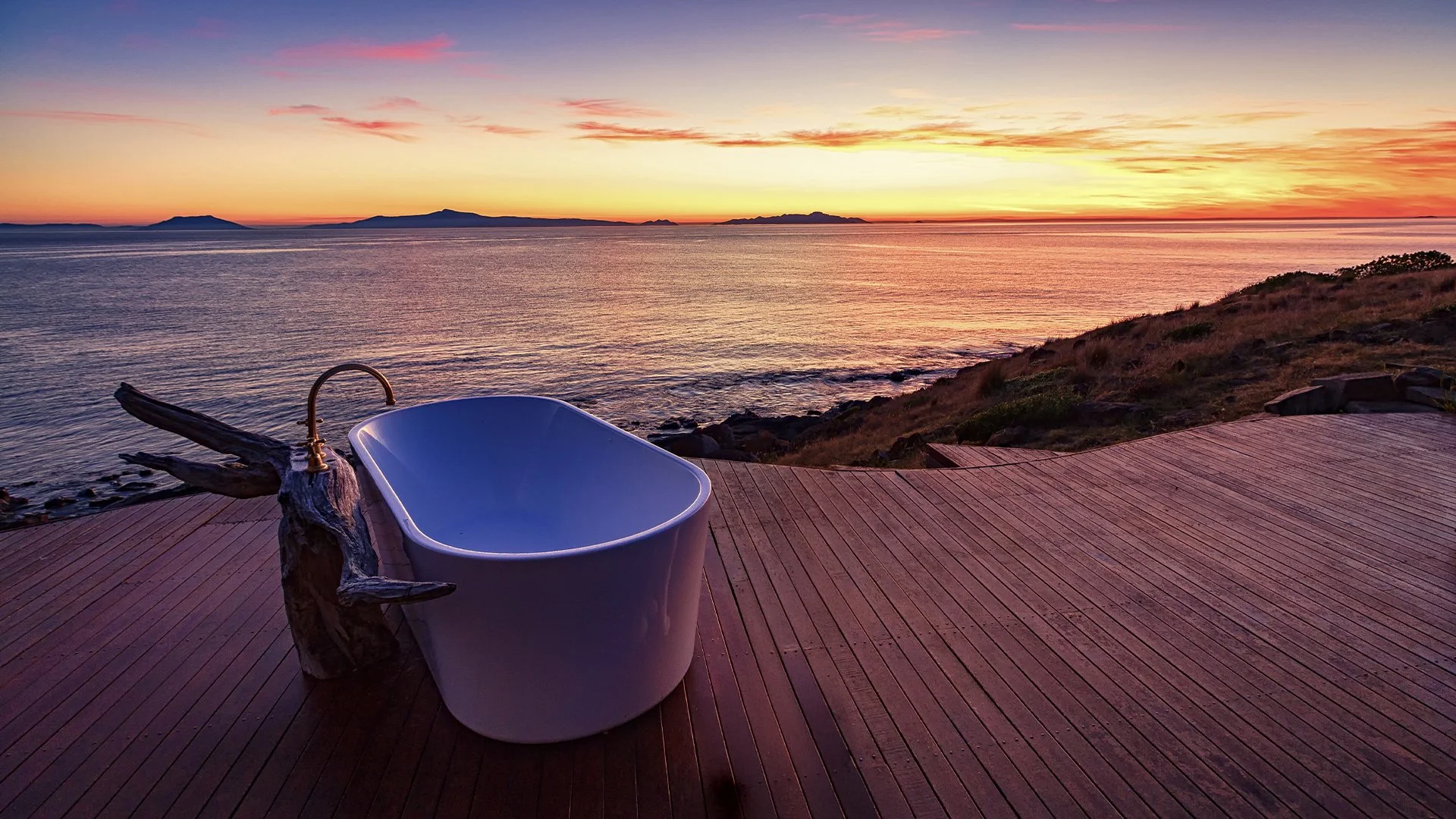
Image courtesy of Thalia Haven
We rarely notice the spaces in which our everyday rituals take place. At home, familiarity makes them almost invisible. We know where the morning light falls, where the towel hangs, where the things we reach for each day have found their place. The environment becomes so much a part of the ritual that we stop thinking about it at all.
It is often only when we leave home that we become aware of this relationship again. A different room changes the light. An open window brings unfamiliar air and sound. Materials feel different beneath the hand. The view beyond a bath may be a wall, a garden, a city or an uninterrupted horizon. The ritual itself may remain unchanged, yet the experience of it can feel entirely different.
Some spaces seem to understand this particularly well. They do not ask for our attention through excess or spectacle. Instead, there is a sense that light, material, proportion, privacy and the landscape beyond have been allowed to work together. We slow down not because we have been instructed to, but because the environment has created the conditions in which slowing down feels natural.
On Tasmania's East Coast, Thalia Haven offers a particularly beautiful expression of this idea. Stone pavilions sit within a wild coastal landscape overlooking Great Oyster Bay, where the distinction between the built environment and the landscape around it feels deliberately quiet. Here, the elements that shape a restorative space are not confined to what has been placed within its walls. They extend to the air, the water, the changing light and the sense of distance from the demands of everyday life.
Perhaps this is what distinguishes a genuinely restorative space from one that is simply beautiful. Beauty may hold our attention for a moment. Restoration asks something quieter of an environment: that it gives us enough space to notice how we feel within it.
And perhaps the most considered spaces achieve this not through what they add, but through what they understand can be left out.
What Makes a Space Restorative
There is no single material, view or architectural detail that makes a space restorative. We recognise the feeling before we necessarily understand what has created it. There is often a sense of quiet, of having enough room around us, and of being somewhere that asks very little in return for our attention.
Natural materials can contribute to this. Stone carries weight and permanence. Timber brings warmth and texture. Water introduces movement and sound, while natural light changes slowly throughout the day rather than remaining fixed. Individually, none of these elements guarantees restoration. It is the relationship between them — and the restraint with which they are used — that can change the way a space is experienced.
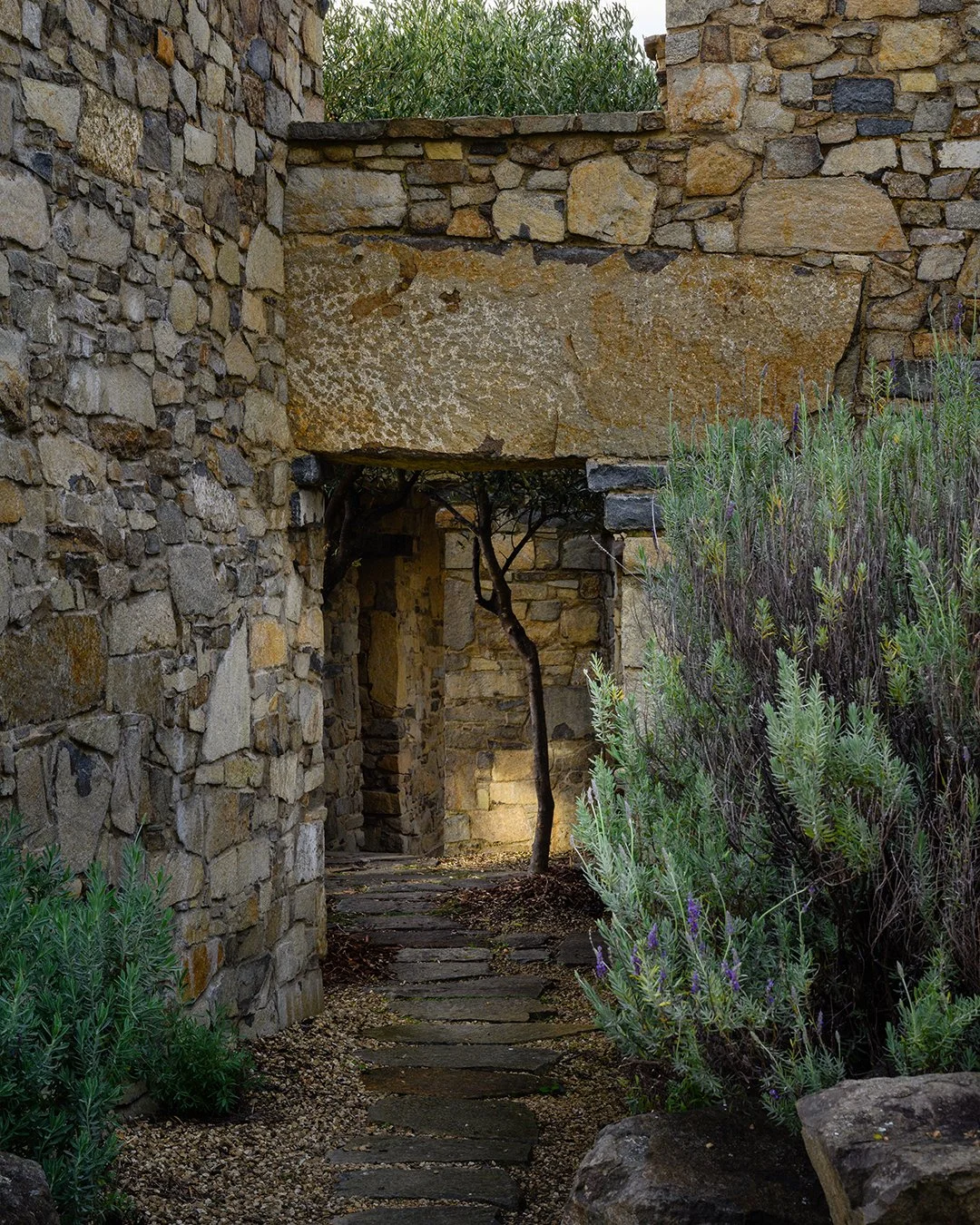
Image courtesy of Thalia Haven
Connection to the landscape can be equally important. A window that draws the eye towards water, a courtyard open to the air, or a material chosen because it belongs naturally within its surroundings can soften the distinction between being inside and outside. The environment no longer ends at the walls of a room. Weather, light, season and landscape are allowed to become part of the experience.
At Thalia Haven, this relationship is particularly tangible. Stone pavilions sit within the landscape of Tasmania's East Coast, while courtyards, natural materials and views across Great Oyster Bay allow the surrounding environment to remain continually present. There is a sense that the landscape has not been treated as something to observe from a distance, but as something the experience of the property remains connected to.
Privacy matters too. Restoration requires a certain freedom from demand — from noise, interruption and the feeling of being observed or hurried. This does not necessarily require isolation. It can be created through thoughtful distance, acoustic quiet, a protected outlook or simply the ability to occupy a space without feeling that something is expected of us.
Perhaps this is why genuinely restorative spaces can be difficult to describe. Their effect rarely comes from one spectacular element. More often, it is the accumulation of quieter decisions: where the light enters, what we can hear, what we can touch, what we can see beyond the room, and how much has been allowed to remain absent.
The most restorative environments do not necessarily tell us to slow down. They simply make it possible.
The Bath as the Centre of the Restorative Space
There is something about a bath that changes our relationship with a space. Unlike the routines we move through quickly, bathing asks us to remain in one place for a while. We become more aware of what surrounds us — the temperature of the air, the quality of the light, the sounds beyond the room and the materials within reach.
We have explored the bath before as a ritual of restoration: the warmth of the water, the time it creates and the simple act of allowing the body to become still. Yet the environment in which that ritual takes place can be just as significant. A bath positioned beside a window feels different from one enclosed within a room. Move it outdoors entirely, and the boundaries of the ritual begin to change again.
At Thalia Haven, the outdoor bath overlooking Great Oyster Bay brings this relationship into focus. Warm water meets the cooler Tasmanian air. The sky replaces the ceiling. The sounds of the surrounding landscape remain present, and the view extends beyond the edge of the bath towards the water. What might ordinarily be one element within a bathroom becomes part of something much larger.
There is a particular intimacy in designing a bathing space this way. It does not require the landscape to become decoration or scenery. Instead, the landscape is allowed to participate in the ritual. Changes in weather, light and season mean the experience can never be entirely repeated. A bath taken in the early morning belongs to a different environment from one taken as the light disappears, even though the ritual itself may be much the same.
What we add to the water can become part of this sensory relationship too. The V&M SPA Lavender Bath Milk was created around a similarly simple idea: that a bathing ritual does not need to become complicated in order to feel considered. Added to warm water, it brings Tasmanian Lavender and magnesium salts into a ritual already shaped by warmth, stillness and time. In an environment such as this, the formulation does not need to compete with the experience around it. It simply becomes part of it.
Perhaps that is why the bath can hold such a distinctive place within a restorative environment. It asks very little of us beyond remaining where we are. And when the space around it has been considered with equal restraint, the distinction between the ritual and its surroundings begins to soften.
The Ritual and the Environment in Conversation
A ritual does not exist separately from the place in which it happens. The formulation may be the same, the sequence familiar, yet our experience of it can change according to what surrounds us.
Consider something as ordinary as washing at the end of the day. At home, it may happen almost without thought, one familiar action following another. Somewhere else, perhaps after a day spent walking beside the sea or moving through an unfamiliar landscape, the same act can feel entirely different. We notice the warmth of the water, the fragrance released into the air, the texture of a formulation against the skin. Nothing about the ritual itself has necessarily changed. What has changed is our attention to it.
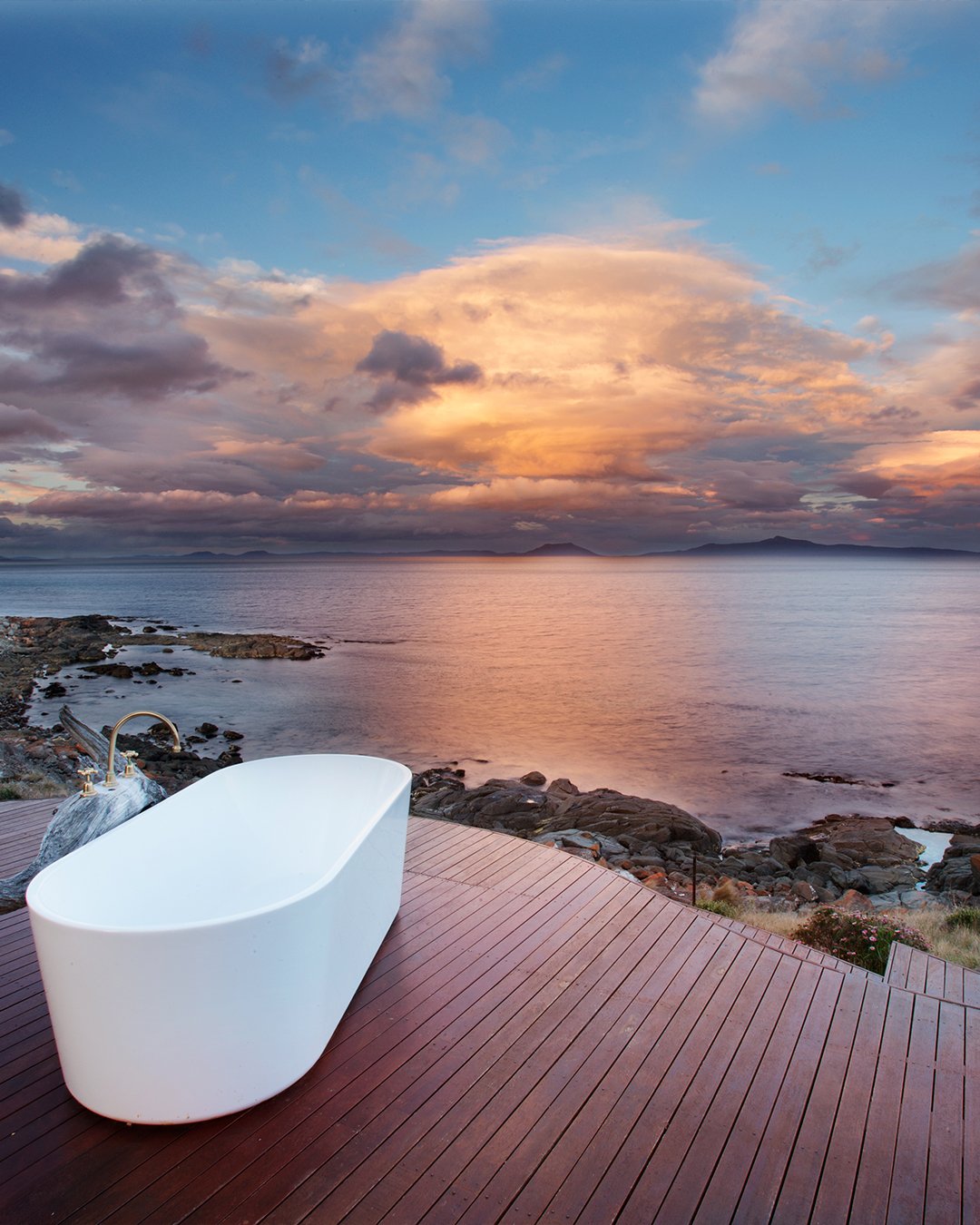
Image courtesy of Thalia Haven
The environment can create space for that attention. Quiet makes subtle sounds more noticeable. Natural light changes the way we experience a room. Materials such as stone and timber bring texture beneath the hand, while an open window can allow air, weather and the sounds of the landscape to enter. These elements do not perform the ritual for us, nor do they guarantee that we will slow down. They simply create conditions in which familiar acts can be experienced more fully.
The relationship moves in the other direction too. A beautifully considered environment can be changed by the objects and formulations introduced into it. What sits beside a basin, what is placed within reach of a bath, the fragrance that remains in the air and the vessels we handle each day all become part of our experience of the space. The smallest details can either belong quietly within their surroundings or call attention away from them.
This is where environment and ritual begin to enter into conversation. Neither needs to dominate the other. A considered formulation does not need to announce itself within a considered space; it can support what the environment has already made possible. In the same way, a beautiful setting need not turn an everyday ritual into something elaborate. Sometimes it simply allows us to notice what was already there.
This relationship sits at the heart of the V&M SPA Ritual Portfolio. Rather than thinking about hair and body formulations as objects placed into an environment after everything else has been considered, we are interested in how they will live within that environment: how they are used, what they contribute sensorially, and whether they feel naturally connected to the experience a space is trying to create.
Perhaps the most thoughtful rituals and the most thoughtful spaces share this quality. Nothing is asking to be noticed at the expense of everything else. Each element has a purpose, each has room to exist, and together they create an experience that feels coherent without needing to explain itself.
What the Bathroom Says About a Space
There are few spaces within hospitality that a guest experiences as privately as the bathroom. It is where the day often begins and ends, where we prepare ourselves before stepping outside and where, on returning, we wash away what we have carried with us. For a room designed primarily around function, it holds an unexpectedly intimate place within the experience of being away from home.
Perhaps this is why the smallest decisions within it can feel so noticeable. The temperature and pressure of the water. The weight of a towel. The surface beneath bare feet. The light around a mirror. The formulation beside the basin or within the shower. Each may appear incidental when considered alone, yet together they communicate something about the care with which the wider experience has been imagined.
Amenities belong within this language. Their role extends beyond simply being available when they are needed. We experience them through fragrance, texture and the way they feel on the hair and skin, but also through their vessels, their placement and how naturally they sit within the environment around them. Like every other object introduced into a considered space, they become part of its material and sensory vocabulary.
This does not mean that every element needs to be distinctive or elaborate. Often the opposite is true. When an environment has a strong sense of place, the most thoughtful choices may be those that support it quietly. A body wash used beneath warm water — Australian made and formulated with native botanicals — does not need to become the defining experience of a beautiful bathroom. It needs to perform its purpose well, feel considered in use and belong naturally within the ritual the space has created.
For those designing or shaping a guest experience, this presents an interesting question. Not simply what should we provide?, but what does what we provide say about the way we have considered the person who will use it? The answer may be found in formulation and fragrance, but equally in function, material, proportion and the ease with which each element becomes part of the guest's stay.
A bathroom can therefore communicate much more than its aesthetic. At its most considered, it tells the guest that the private moments of their experience have received the same attention as the spaces designed to be seen.
Designing for Restoration — What Considered Spaces Have in Common
The spaces that restore us rarely do so through a single gesture. It may be tempting to attribute the feeling to the view, the architecture, the bath or the quiet, but perhaps what we are responding to is something less immediately visible: the sense that each decision belongs to the same idea.
Considered spaces have a coherence to them. Materials respond to their surroundings rather than competing with them. Light is allowed to change throughout the day. Objects are present because they have a purpose. What we touch, smell and hear feels connected to where we are. Even the things that are absent seem to matter.
This does not require a particular architectural style, nor does restoration belong only to remote places. The principles can exist on a Tasmanian headland overlooking the sea, within a hotel in the centre of a city, or in a bathroom at home. What changes is the scale and the setting. What remains is the intention with which the environment has been considered.
Perhaps restraint is part of this. A restorative space does not need to anticipate every possible desire or fill every surface simply because it can. There is value in leaving room — for quiet, for movement, for changing light, for the person occupying the space to experience it in their own way. The same is true of ritual. More does not necessarily make an experience more considered. Often, it is the clarity of what has been chosen, and the confidence to leave everything else aside, that allows the experience to feel complete.
At Thalia Haven, this idea can be felt across very different scales. It is present in the relationship between the stone pavilions and the landscape, in the distance of the horizon across Great Oyster Bay, and in something as intimate as a bath positioned beneath the open sky. Architecture, landscape and ritual are not experienced as separate layers. They become parts of the same experience.
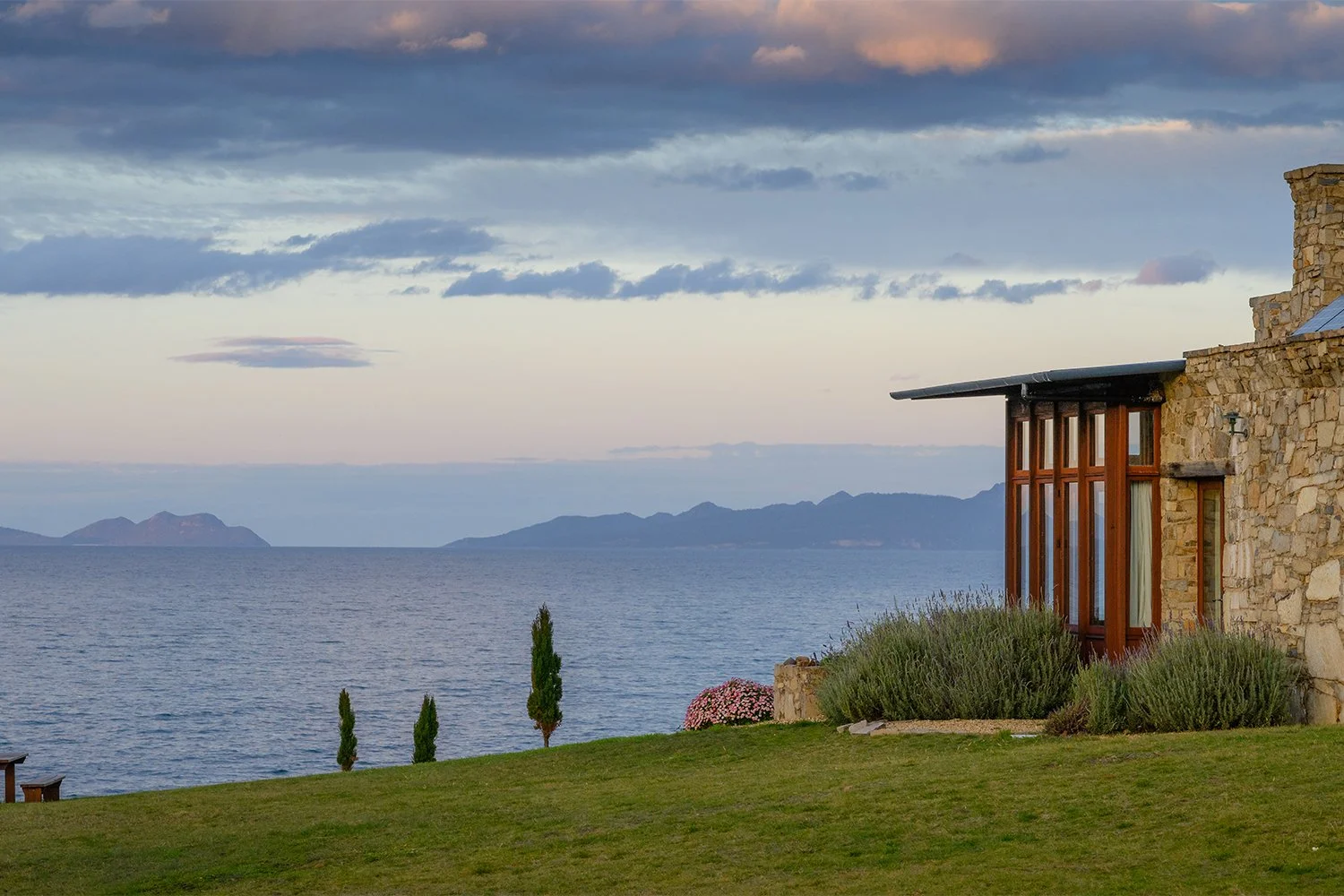
Image courtesy of Thalia Haven
And perhaps that is what the most considered spaces ultimately have in common. They begin not with the question of what can be added, but with an understanding of how someone might feel while they are there. From that understanding, decisions about material, light, privacy, objects and ritual begin to find their place.
We may not consciously notice each of those decisions. Perhaps we are not meant to. We simply recognise the feeling they create: that for a little while, there is nowhere else we need to be.
The environment of ritual is not a backdrop. It is part of the ritual itself.
Hospitality & Partnerships
The environments in which a ritual takes place are as individual as the people who move through them.
V&M SPA works with boutique hotels, wellness retreats, architects and designers to consider how hair and body rituals can belong naturally within the spaces they create. Through our Ritual Portfolio, we approach amenities not simply as products placed within a bathroom, but as part of the wider guest experience — considering formulation, function, sensory experience and the environment in which each ritual will be used.
For hospitality and partnership enquiries, explore the V&M SPA Partnerships page to learn more about our Ritual Portfolio, amenity offerings and considered collaborations for guest environments.
Common Questions
What makes a wellness retreat genuinely restorative?
There is no single formula for a restorative retreat. Natural materials, privacy, connection to landscape, light, quiet and thoughtful sensory details can all contribute, but it is often the relationship between these elements that matters most. A genuinely restorative environment allows the guest to slow down without demanding that they do so. The experience feels coherent, considered and connected to its surroundings rather than dependent upon any single feature.
What should a luxury retreat include in its bathroom amenities?
Bathroom amenities should respond to both the practical needs of the guest and the wider experience of the property. Formulation, fragrance, texture, function, presentation and ease of use all matter, as does how naturally each element belongs within the bathroom itself. For V&M SPA, the starting point is not how much can be added to the ritual, but which formulations genuinely contribute to it. A considered amenity offering should feel like part of the guest experience rather than something separate from it.
How does environment affect a wellness ritual?
Environment can change the way we experience even a familiar ritual. Light, sound, temperature, privacy, natural materials and connection to the landscape can influence what we notice and how much attention we give to an everyday act such as bathing or washing. The ritual itself may remain unchanged, yet a thoughtfully considered environment can create the conditions in which it is experienced more fully.
What is Thalia Haven?
Thalia Haven is a private retreat on Tasmania's East Coast, set on a secluded peninsula overlooking Great Oyster Bay. Its stone pavilions, courtyards, outdoor bath and connection to the surrounding coastal landscape make it a particularly beautiful example of the relationship between environment and ritual explored throughout this Journal. V&M SPA and Thalia Haven have shared a relationship over several years, making its inclusion here a natural expression of a connection that has developed quietly over time.
How does V&M SPA work with wellness spaces and retreats?
V&M SPA works with boutique hotels, wellness retreats, architects and designers through our Ritual Portfolio, considering how hair and body formulations can become part of a property's wider guest experience. Partnerships can include amenity formats and considered ritual offerings, with each approached in relation to the environment, guest and way the formulations will actually be experienced. Hospitality partners can explore the V&M SPA Partnerships page for further information and enquiries.
Victoria Maude is the founder of V&M SPA. V&M SPA formulations have been developed over nineteen years of research, refinement, and collaboration with Australian ingredient growers.